

Automation equipment manufacturers often need custom mechanical components that are designed specifically for a machine, production line, or automated process.
These components may include mounting brackets, fixtures, guide rails, flanges, adapters, shafts, machined plates, and custom blocks. Unlike standardized hardware, many of these parts must be manufactured according to engineering drawings and specific assembly requirements.
This is where CNC machining for automation equipment becomes an important manufacturing solution.
CNC machining allows automation manufacturers to produce custom components in different materials, quantities, and geometries without the need for dedicated tooling.
In this article, we look at common CNC machined parts used in automation equipment and their applications.
Common CNC Machined Parts for Automation Equipment
Automation machines can contain hundreds or even thousands of individual mechanical components.
Many of the custom structural and functional parts can be produced through CNC machining.
1. Mounting Brackets
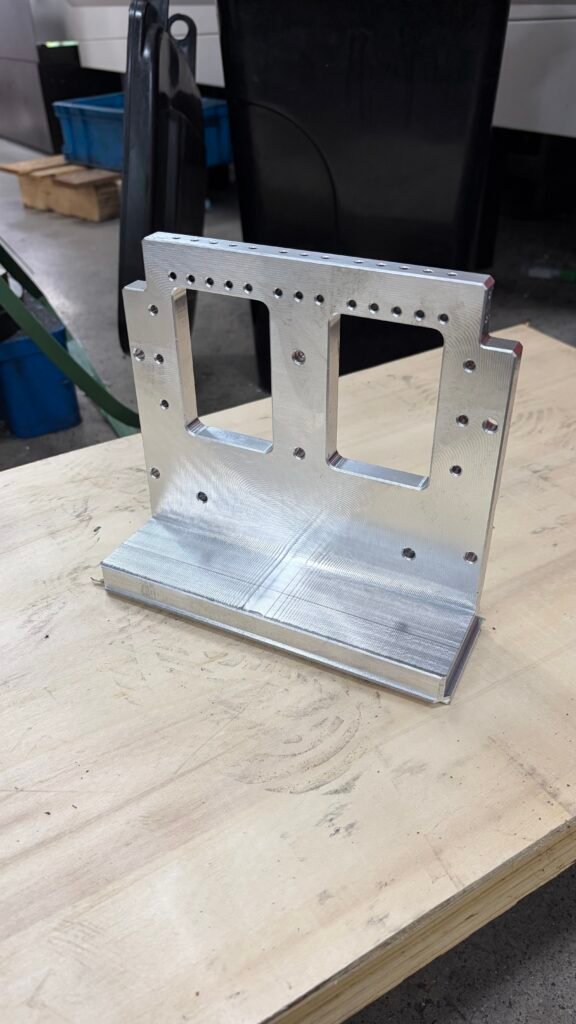
Mounting brackets are one of the most common CNC machined components used in automation equipment.
They are used to mount and position sensors, motors, cylinders, cameras, actuators, and other machine components.
Common examples include:
- Motor mounting brackets
- Sensor brackets
- Cylinder brackets
- Camera brackets
- Support brackets
- Custom L-shaped brackets
- Custom U-shaped brackets
Aluminum is frequently used for these components because it combines low weight with good machinability and adequate strength for many automation applications.
Steel and stainless steel can be selected when higher strength, durability, or corrosion resistance is required.
2. Fixtures and Jigs
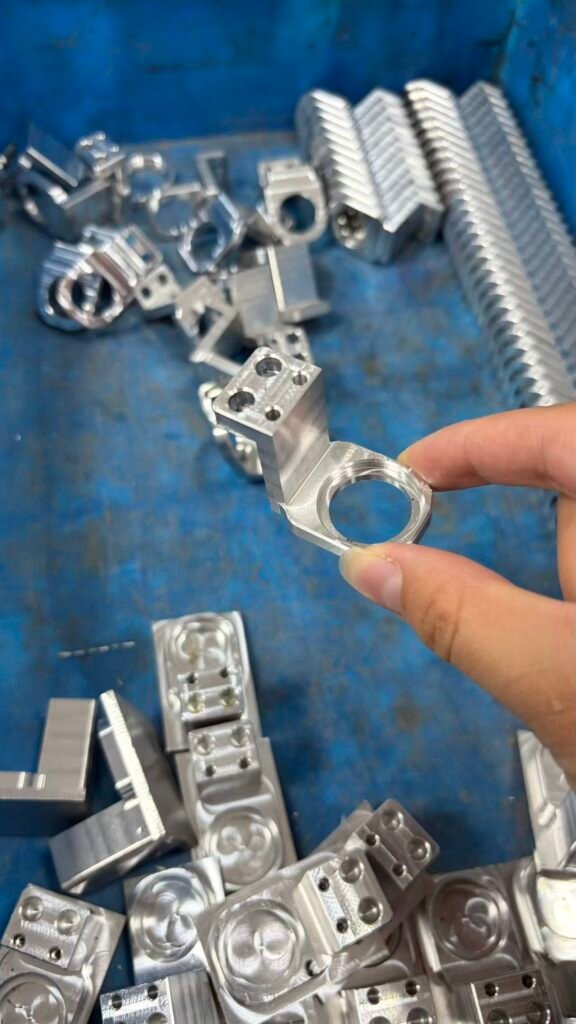
Fixtures and jigs are widely used in automated manufacturing and assembly processes.
They help locate, hold, support, or position a workpiece during assembly, inspection, testing, welding, or other production operations.
Typical CNC machined fixtures include:
- Assembly fixtures
- Inspection fixtures
- Positioning jigs
- Clamping fixtures
- Welding fixtures
- Custom workholding components
Because these components are often designed for a specific product or manufacturing process, standard components may not provide the required geometry or positioning accuracy.
CNC machining allows these custom fixtures to be manufactured directly from engineering drawings or 3D models.
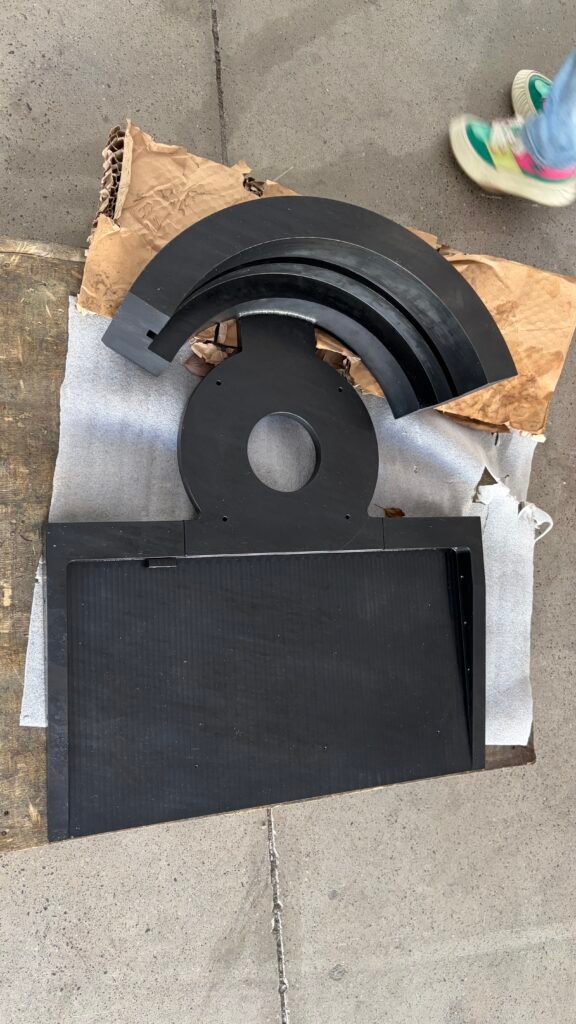
3. Guide Rails and Guide Components
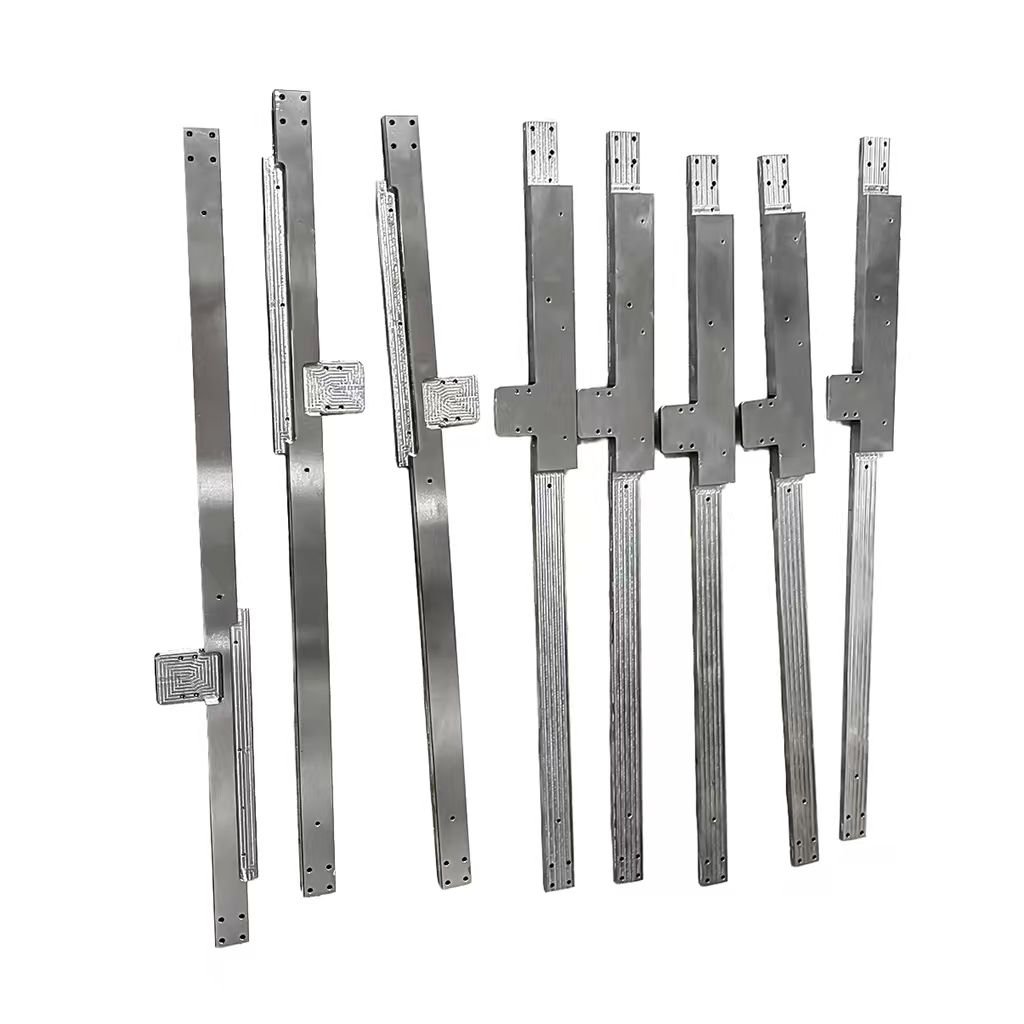
Guide components are used to control the movement and positioning of mechanisms within automation equipment.
Depending on the machine design, these parts may include:
- Custom guide rails
- Guide blocks
- Sliding plates
- Positioning guides
- Linear motion supports
- Wear plates
Dimensional accuracy and surface condition can be important because these components may directly affect movement, alignment, and repeatability.
The appropriate material and machining process should therefore be selected according to the actual application.
4. Flanges and Adapters
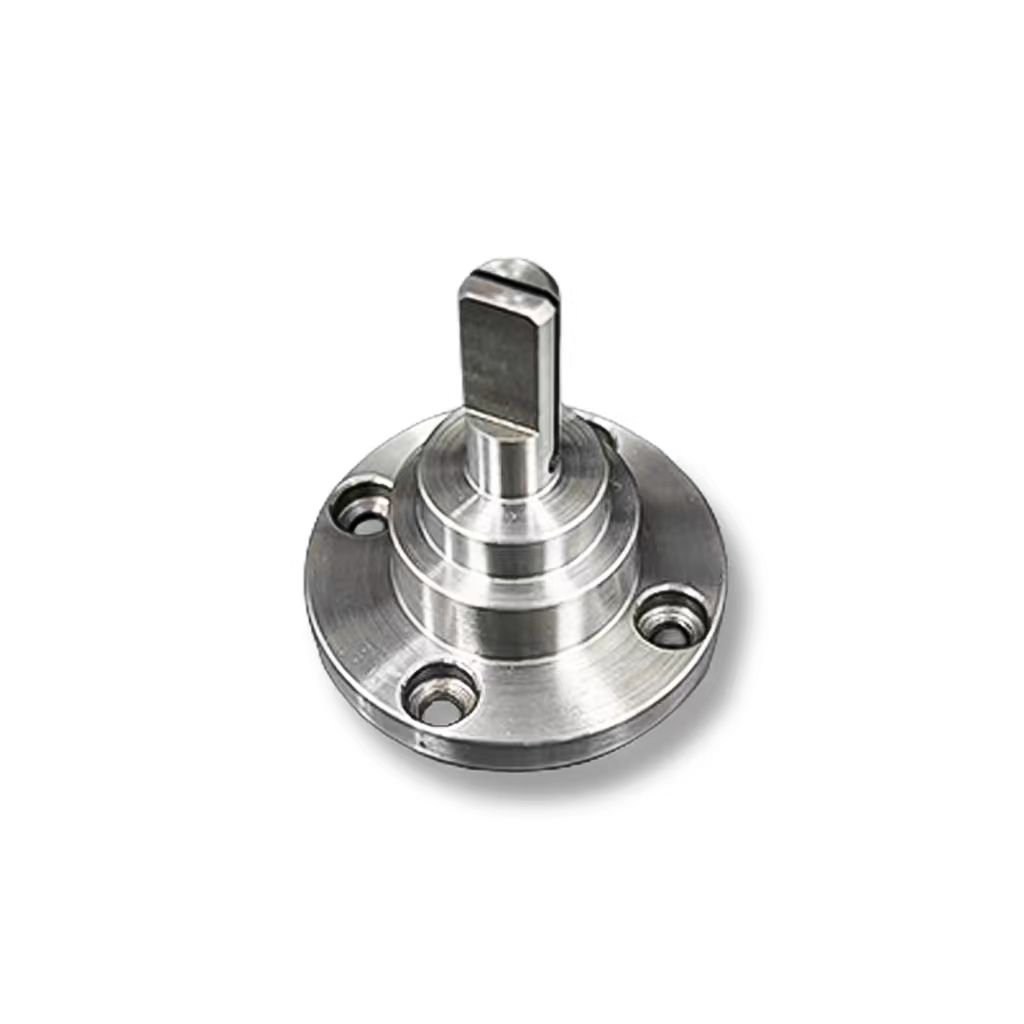
Flanges and adapters connect different mechanical components and assemblies.
In automation equipment, CNC machined flanges and adapters can be used to connect motors, actuators, shafts, tubes, sensors, and other components.
Typical examples include:
- Mounting flanges
- Motor adapters
- Shaft adapters
- Tube adapters
- Connection plates
- Interface components
These parts often require accurately machined mounting holes and interface dimensions to ensure proper assembly.
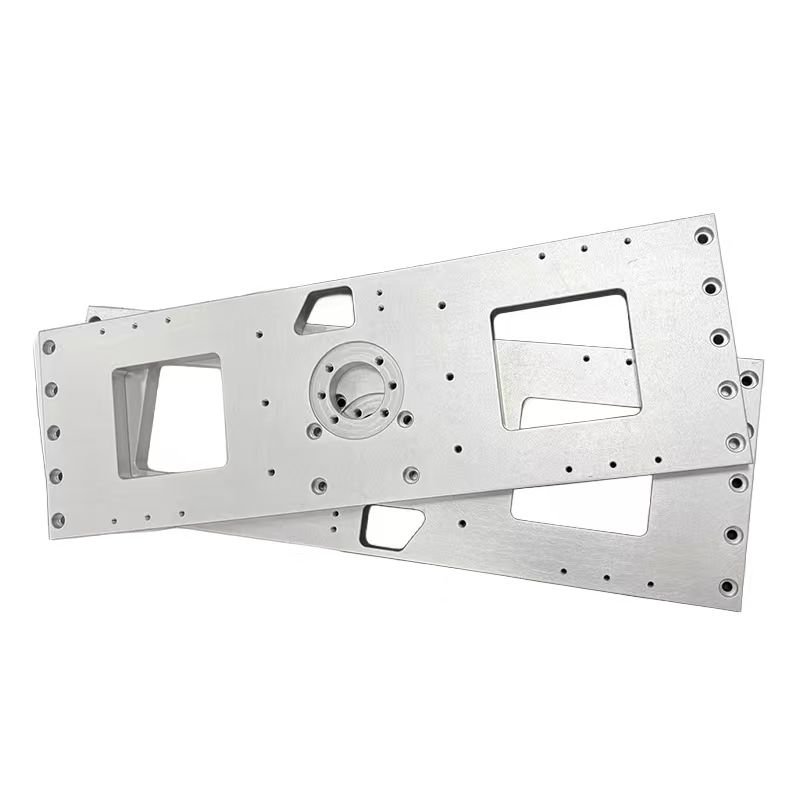
5. Machined Plates and Blocks
Machined plates and blocks are commonly used as structural and mounting components inside automation equipment.
Examples include:
- Base plates
- Mounting plates
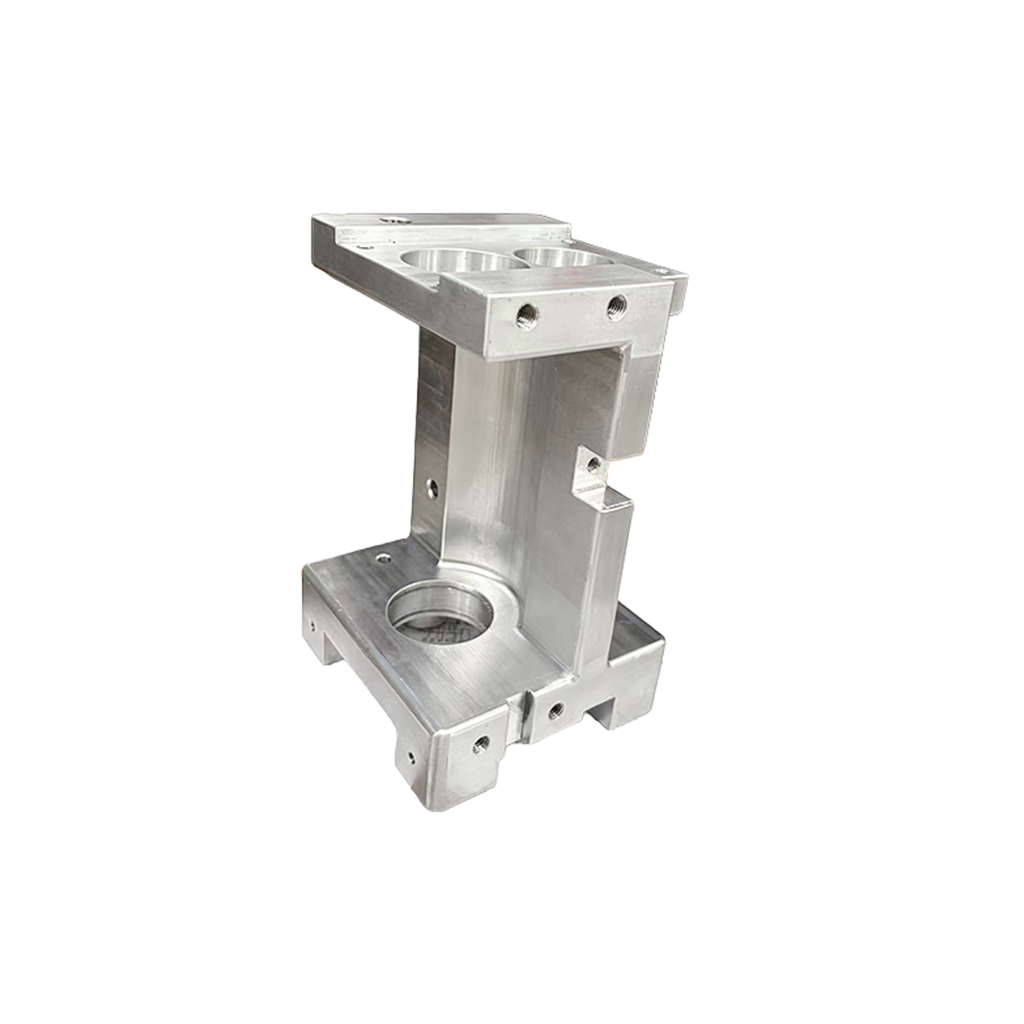
- Connection blocks
- Spacer blocks
- Support blocks
- Positioning blocks
These components are often machined from aluminum, stainless steel, carbon steel, or engineering plastics.
Depending on the application, secondary processes such as anodizing, plating, black oxide, or other surface treatments may also be required.
6. Shafts, Pins and Cylindrical Components
Automation equipment also contains many rotating and positioning components.
CNC turning and milling can be used to manufacture:
- Drive shafts
- Pivot shafts
- Positioning pins
- Guide pins
- Spacer shafts
- Custom axles
Depending on the application, these components may require controlled diameters, concentricity, straightness, threads, or specific surface finishes.
For applications involving higher wear or mechanical loads, appropriate steel grades and heat treatment can be considered.
Materials for CNC Machined Automation Parts
The material used for an automation component depends on its function, mechanical load, environment, weight requirements, and cost.
Aluminum
Aluminum is widely used for automation components because it is lightweight, machinable, and available in many commonly used grades.
Typical applications include:
- Mounting brackets
- Plates
- Blocks
- Fixtures
- Adapters
- Structural components
Stainless Steel
Stainless steel can be selected when corrosion resistance and mechanical durability are important.
Typical applications include:
- Shafts
- Fixtures
- Brackets
- Pins
- Adapters
- Mechanical supports
Carbon and Alloy Steel
Steel is suitable for components requiring higher strength, hardness, or wear resistance.
Heat treatment or surface treatment may also be used depending on the application.
Engineering Plastics
Engineering plastics such as POM and nylon can be used for lightweight, insulating, or low-friction components.
Typical applications include:
- Guides
- Bushings
- Wear components
- Spacers
- Insulating parts
- Protective components
CNC Machining for Automation Prototypes and Small Batches
Automation equipment is often customized for a specific manufacturing process.
As a result, equipment manufacturers may initially need only a small number of custom parts.
A typical development process may look like:
Prototype → Testing → Design Modification → Small-Batch Production → Repeat Production
CNC machining is particularly suitable for this type of project because custom parts can be produced directly from engineering drawings or 3D models without dedicated molds.
When a design changes during equipment development, the machining program and manufacturing process can also be updated for the next revision.
This flexibility makes CNC machining useful for automation equipment manufacturers developing new machines, custom mechanisms, and production lines.
What Should You Consider When Ordering CNC Parts for Automation Equipment?
When outsourcing CNC machining, several factors should be considered before production begins.
1. Engineering Drawings
The drawing should clearly define critical dimensions, tolerances, material, threads, surface finish, and other manufacturing requirements.
If some dimensions are functionally critical, they should be clearly identified.
2. Material Selection
The material should be selected according to the actual function of the component.
For example, a lightweight aluminum bracket may be appropriate for one application, while a stainless steel shaft may be more suitable for another.
3. Tolerances
Not every dimension needs an extremely tight tolerance.
Identifying critical dimensions can help balance equipment performance and manufacturing cost.
This is also where a proper DFM review can be valuable.
For more information, see our previous article:
[What Is DFM in CNC Machining?]
4. Surface Treatment
Depending on the application, CNC machined automation components may require:
- Anodizing
- Plating
- Black oxide
- Passivation
- Other surface treatments
The surface treatment should be selected according to the material and intended application.
5. Quantity
Prototype, small-batch, and repeat-production projects may require different manufacturing approaches.
A CNC machining supplier should understand the expected production quantity and future demand before determining the most suitable process.
From Raw Material to Custom Automation Components
At Woedtech, we manufacture custom CNC machined components according to customer drawings and application requirements.
Our capabilities include:
- 3-axis CNC machining
- 4-axis CNC machining
- 5-axis CNC machining
- CNC turning
- Wire EDM
- Manual machining
- CMM inspection
We manufacture components such as brackets, fixtures, guide components, flanges, adapters, plates, blocks, shafts, pins, and other custom mechanical parts.
Our manufacturing process can support different project stages, from prototype parts and engineering samples to small-batch and repeat production.
For automation equipment manufacturers, the goal is not simply to manufacture individual parts. The components must also fit the customer’s assembly and meet the functional requirements of the equipment.
Why Work with a CNC Machining Supplier for Automation Parts?
Working with a specialized CNC machining supplier can give automation equipment manufacturers more flexibility when developing and producing custom components.
Instead of manufacturing every component internally, equipment manufacturers can outsource selected parts according to their drawings and production requirements.
This can be particularly useful for:
- New machine development
- Engineering prototypes
- Custom automation systems
- Small-batch production
- Replacement components
- Machine modifications
- Repeat production
A capable supplier can also review drawings before machining and identify potential manufacturing issues before production begins.
Conclusion
CNC machining is widely used for manufacturing custom components for automation equipment.
Common parts include mounting brackets, fixtures and jigs, guide rails, flanges, adapters, machined plates, blocks, shafts, and pins.
The appropriate manufacturing process depends on the component’s function, material, tolerance, quantity, surface treatment, and application.
For automation equipment manufacturers, CNC machining provides a flexible solution for prototypes, small batches, and repeat production.
If you are developing automation equipment and need custom CNC machined components, send us your 2D drawings or 3D models.
Woedtech can review your design, evaluate machining feasibility, and provide a quotation for your project.
Have a CNC part for your automation equipment? Send us your drawing and let’s discuss your project.